





Please Wait...
Get Quote

Services

Blogs

Blogs

BEST METHOD FOR MOVING BOOKS AND STATIONERY

Introduction

Moving houses, offices, or shifting to a new city is often a hassle. You have to take care of packing, furniture arrangements, and transportation. And if you are someone who loves books or stationery, it's even harder. That's why it's necessary to be aware of the best method for moving these items carefully and efficiently so that they don't get damaged in transit and can be relocated with ease. With our blog, you will explore the best ways to move books and stationery, from bubble wrap to boxes and other methods that can make your move easier.

Packing Books and Stationery

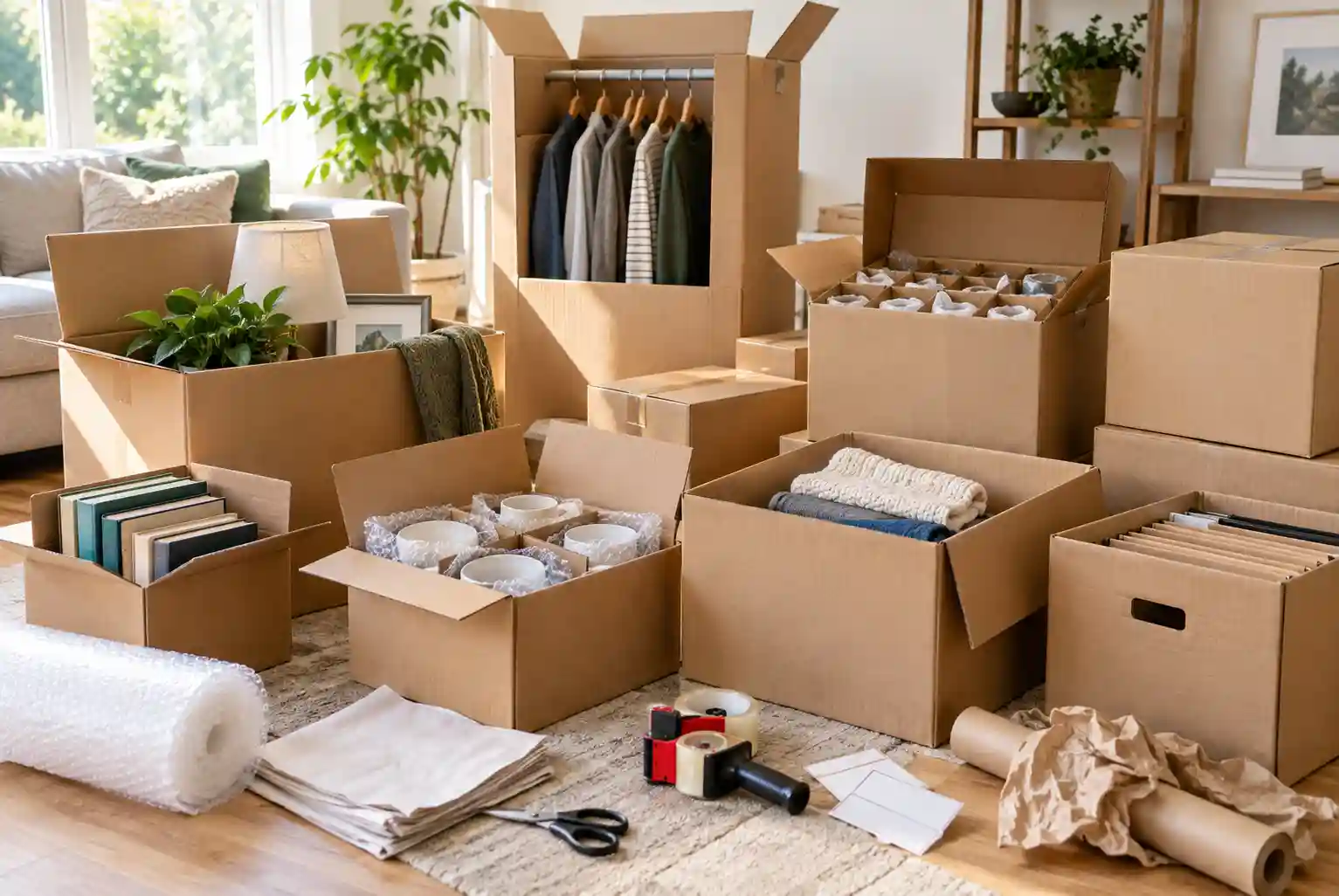
When packing books, be sure to pack them in boxes that are slightly larger than the book itself. This will prevent the books from being damaged during the move.
It's also a good idea to label the boxes containing books. This will make it easier to find the box containing the book you're looking for when you need it.
Packing stationery is a bit more difficult than packing books, as you need to be careful not to damage or bend any of the items. 
  • Start by sorting through your stationery and only keeping what you absolutely need. This will make packing easier and save you space in the new home.
  • Pack delicate items like pens and pencils in soft cloth bags or bubble wrap to prevent them from being damaged.
  • For larger items like notebooks and planners, use sturdy boxes that won't collapse during the move.
  • Label all of your boxes clearly so you know which ones contain stationery. This will make unpacking easier and help you avoid losing any items.

Unpacking Stationery and Books

If you've ever moved house, you'll know that one of the most tedious tasks is packing up all your belongings. And if you're a bookworm or stationery addict, the task can be even more daunting. But don't worry. We've got you covered. Here's our guide to the best way to move your books and stationery.
Packing up books and stationery can be a bit of a challenge, but it doesn't have to be. With a little bit of preparation and organization, you can get everything packed up and ready to go in no time.
The thing you need to do is decide which books and stationery you're going to take with you. This can be a difficult decision, but it's important to be ruthless. In case you haven't used something for years, chances are you won't miss it. So set aside anything that you know you won't need and focus on packing only the essentials.
Once you've decided what's coming with you, it's time to start packing. For books, it's best to use small boxes, so they're easy to carry. You can pack them tightly together, so they don't move around too much in transit. Just make sure not to over-pack the box, or it will become too heavy to lift.
Here are some tips for packing and moving:
  • Pack them in boxes that are the right size. You don't want your boxes to be too big or too small, as this can damage your items.
  • Use paddings such as bubble wrap or packing paper to protect your items from bumps and scratches.
  • Label each box with its contents and destination so that you can easily find everything when you arrive at your new location.
  • If possible, try to keep the boxes of books and stationery together so that they don't get lost in the move.
With these tips in mind, you'll surely have a successful move!

The Best Method for Moving Books and Stationery

When deciding on the best method for moving your books and stationery, if you have a lot of heavy items, you may want to use a truck to move them.
If you're moving long distances, it's probably best to ship your books and stationery. This way, they won't be jostled around as much, and there's less risk of damage. You can pack them up securely in boxes and use packing peanuts or bubble wrap for extra protection.
If you're only moving a short distance, you can probably just load everything into your car. Just make sure to secure everything so it doesn't shift during transit. You may want to put heavier items on the bottom and lighter items on top.
No matter what method you choose, it's important to pack your books and stationery carefully. Make sure they're wrapped securely and labeled properly so you can easily find what you need when you reach your destination.

Conclusion

Moving books and stationery can be a tricky task, but we hope we've provided you with some useful tips for completing the job. Various factors need to be considered when moving books and stationery, from properly packing your belongings to using the right type of container or vehicle. However, by following our methods outlined in this article, you should have no trouble getting all of your items safely from one place to another! But, it is always better to reach out to professional packers and movers service so that you don't have to take stress about it.

Our Blogs

WHAT TYPE OF MOVING BOXES DO YOU NEED? A COMPLETE PACKING GUIDE

Choosing the right moving boxes can make packing safer and easier. This guide explains different moving box sizes, specialty boxes, packing tips, fragile item protection, labelling, and how to choose the best boxes for books, clothes, kitchen items, TVs, mirrors, and other household goods.

NEW CITY CHECKLIST: WHAT TO DO IN THE FIRST 72 HOURS AFTER MOVING

Just moved to a new city? The first few days can feel overwhelming, especially when you are dealing with utilities, internet setup, local services, neighborhood safety, and emergency contacts all at once. This practical first 72-hour checklist helps you prioritize the most important tasks, get essential services running, understand your surroundings, and settle into your new home with greater confidence and less stress.
SHARED VS DEDICATED TRUCK: WHICH IS BETTER FOR HOUSE SHIFTING?

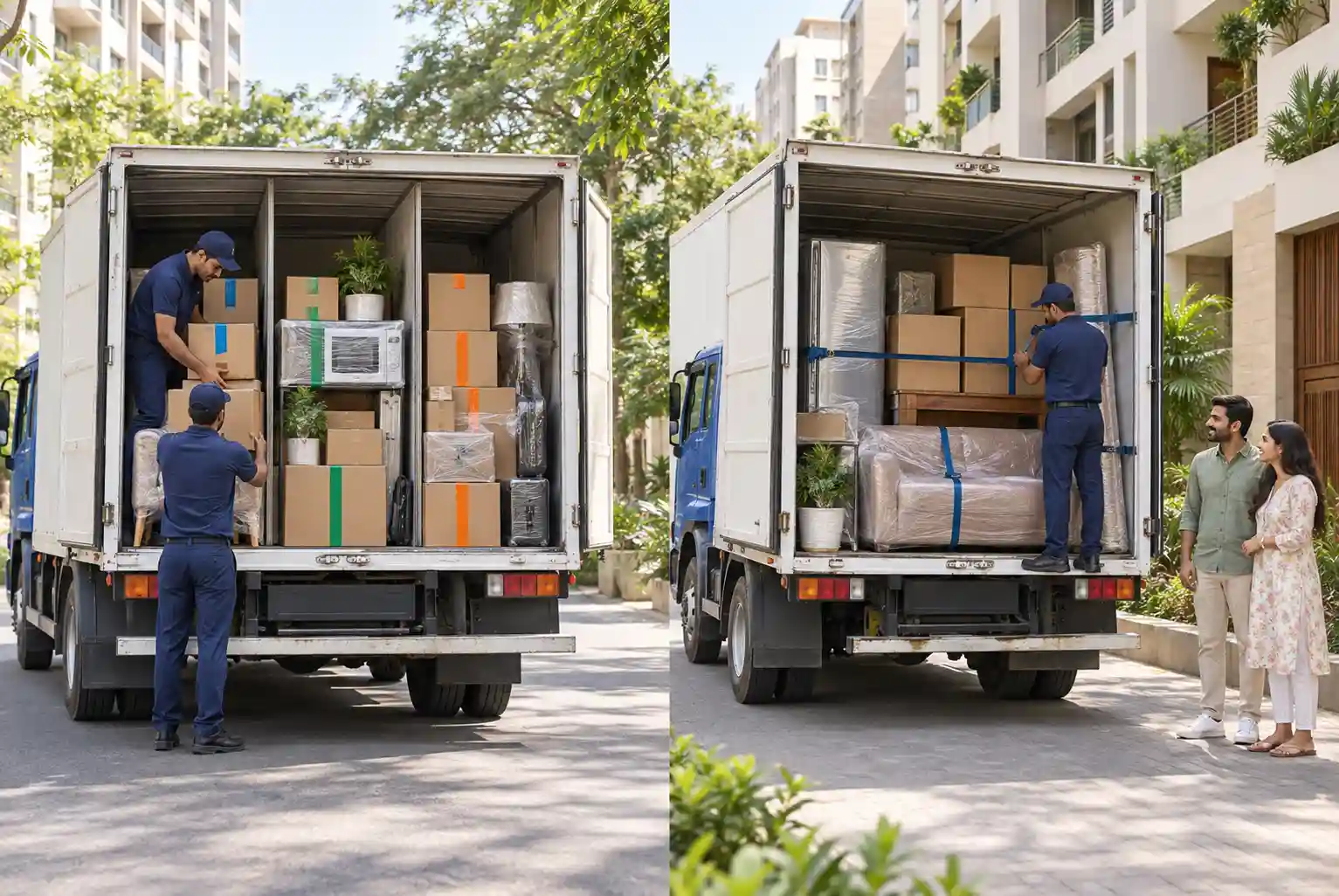
Choosing between a shared truck and a dedicated truck is one of the most confusing parts of house shifting. It affects your moving cost, delivery timeline, and how safely your goods reach your new home. In this guide, we break down the real differences between the two options, when each one makes sense, and how to decide what fits your budget and move size best.

Get
Key Highlights
Key Highlights