






WHY INTERNATIONAL RELOCATION TIMELINES OFTEN SLIP — AND WHAT YOU CAN DO TO STAY ON TRACK

Introduction
An international relocation is far more than moving belongings from one country to another—it is a complex coordination of documentation, logistics, customs, and timelines. Yet, despite careful planning, many individuals and organizations face unexpected delays. These delays not only add stress but can also impact housing, employment start dates, schooling, and overall relocation costs. Understanding the root causes of international relocation delays is the first step toward preventing them and ensuring a smoother global move.
Why Do International Moves Rarely Follow the Original Plan?
One of the biggest concerns relocators face is why international moves get delayed, even when everything appears to be prepared in advance. The reality is that international moves involve multiple stakeholders--shipping lines, customs authorities, destination agents, and regulatory bodies. Any delay at any location can alter the whole plan.
Additionally, different regulations for each country, as well as ports congestion, public holidays, and document discrepancies, frequently result in problems with international relocation timelines. If you don't have a proactive plan and professional advice, even minor mistakes can cause several weeks of delays
Documentation Gaps and Compliance Errors
Incorrect or incomplete documentation is among the top causes of delays in international travel. Customs authorities demand precise documentation, such as packing lists, as well as visas, work permits, and import permits. Any mismatch between the documents and physical items could trigger checks, holds, or even fines.
This is where many new movers accidentally get caught in common international moving mistakes including not estimating the timeframe for paperwork. Each country has its own requirements for compliance and not paying attention to just one thing can slow the process.
Customs Clearance: The Most Unpredictable Phase
Among all the phases of moving, customs is usually the most unpredictable. Customs delays in international relocation may be due to unintentional inspections, changes in regulations or a lack of declarations. Certain items, such as art, electronics and food items, as well as personal belongings, may require permits or may be subject to limitations.
Being aware of ways to avoid delays in shipping and customs such as verifying restricted items and creating documents for each country. This can drastically reduce the possibility of lengthy holds at airports or ports.
Poor Timeline Estimation and Unrealistic Expectations
Many relocations get delayed because the movers don't realize how long the process really will take. The most frequently asked question is why international relocation takes so long, and the solution is in the planning stages that are often overlooked. From the approval of surveys and packing schedules, to the time of shipping and delivery slots, every step needs buffer time.
A thorough timeline for international moves guide can help to set realistic expectations and avoid any last-minute surprises. Without this information, the relocators are often rushed into making decisions and make mistakes that create delays.
Lack of Structured Planning and Coordination
One of the best methods to reduce delays is to know the best way to organize a move step-by-step. The structured planning process allows each step-- survey, packing, shipment booking, customs, and delivery to flow seamlessly.
Clear coordination between origin and destination teams, along with a dedicated move coordinator, is the best way to reduce international relocation time. This guarantees accountability, real-time updates, and prompt intervention if timelines are changed.
How to Proactively Prevent Delays
To stop delays to international moves, relocators should take a proactive approach instead of a reactive strategy. This means early surveys, precise inventory preparation, customs consultations and contingency planning. Understanding how to minimize delays during relocation begins by selecting knowledgeable moving partners who can anticipate risks rather than respond to them.
Utilizing an international moving checklist to prevent delay aids in keeping track of crucial steps and ensures that nothing is missed. From deadlines for document submission to cut-off dates for shipment, checklists help bring order and certainty to the process of moving.
Smart Planning Makes All the Difference
Utilizing the most effective strategies for planning an international relocation, such as starting preparations earlier in the process, avoiding peak shipping times, and maintaining transparent communication, can significantly reduce stress and delays. International relocations are not always simple; however, if you have the right plann they can be managed efficiently.
If executed correctly, the planning process transforms a complex move into a smoothly orchestrated transition.
Final Thoughts: Turning Complexity into Confidence
An international relocation will always involve multiple moving parts, but delays are not inevitable. With informed planning, expert handling, and realistic timelines, most disruptions can be prevented or minimized. Understanding where delays originate—and acting early—empowers individuals and organizations to move globally with confidence.
At PM Relocations (PMR), we specialize in managing international moves with precision, transparency, and end-to-end coordination. Our experienced teams focus on proactive planning, compliance readiness, and seamless execution, helping clients move across borders without unnecessary delays or uncertainty.
Our Blogs

WHAT TYPE OF MOVING BOXES DO YOU NEED? A COMPLETE PACKING GUIDE
Choosing the right moving boxes can make packing safer and easier. This guide explains different moving box sizes, specialty boxes, packing tips, fragile item protection, labelling, and how to choose the best boxes for books, clothes, kitchen items, TVs, mirrors, and other household goods.

NEW CITY CHECKLIST: WHAT TO DO IN THE FIRST 72 HOURS AFTER MOVING
Just moved to a new city? The first few days can feel overwhelming, especially when you are dealing with utilities, internet setup, local services, neighborhood safety, and emergency contacts all at once. This practical first 72-hour checklist helps you prioritize the most important tasks, get essential services running, understand your surroundings, and settle into your new home with greater confidence and less stress.
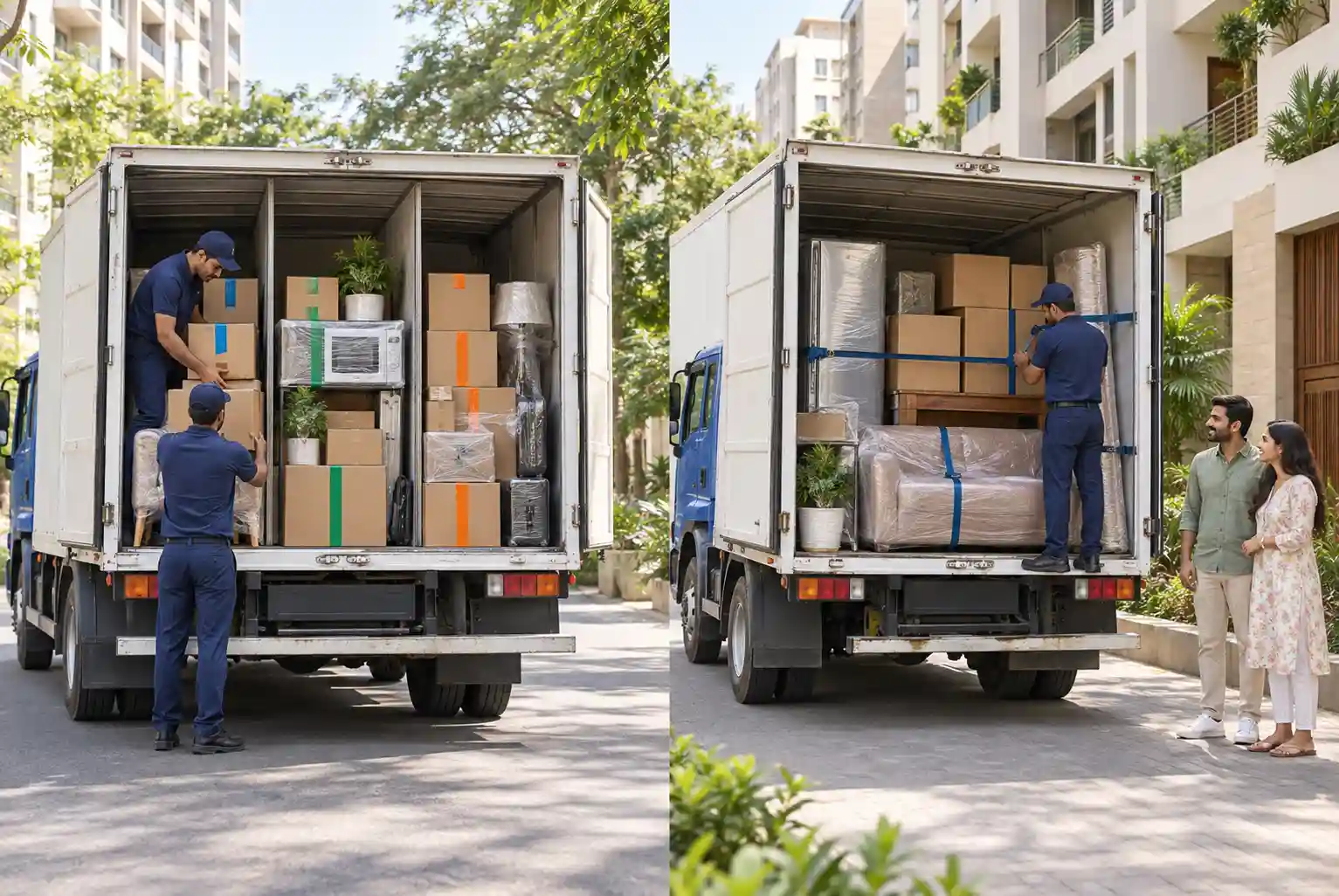
SHARED VS DEDICATED TRUCK: WHICH IS BETTER FOR HOUSE SHIFTING?
Choosing between a shared truck and a dedicated truck is one of the most confusing parts of house shifting. It affects your moving cost, delivery timeline, and how safely your goods reach your new home. In this guide, we break down the real differences between the two options, when each one makes sense, and how to decide what fits your budget and move size best.
 Post Feedback
 Gallery
 Awards & Media
 FAQ
FAQ CSR & Sustainability
.svg)